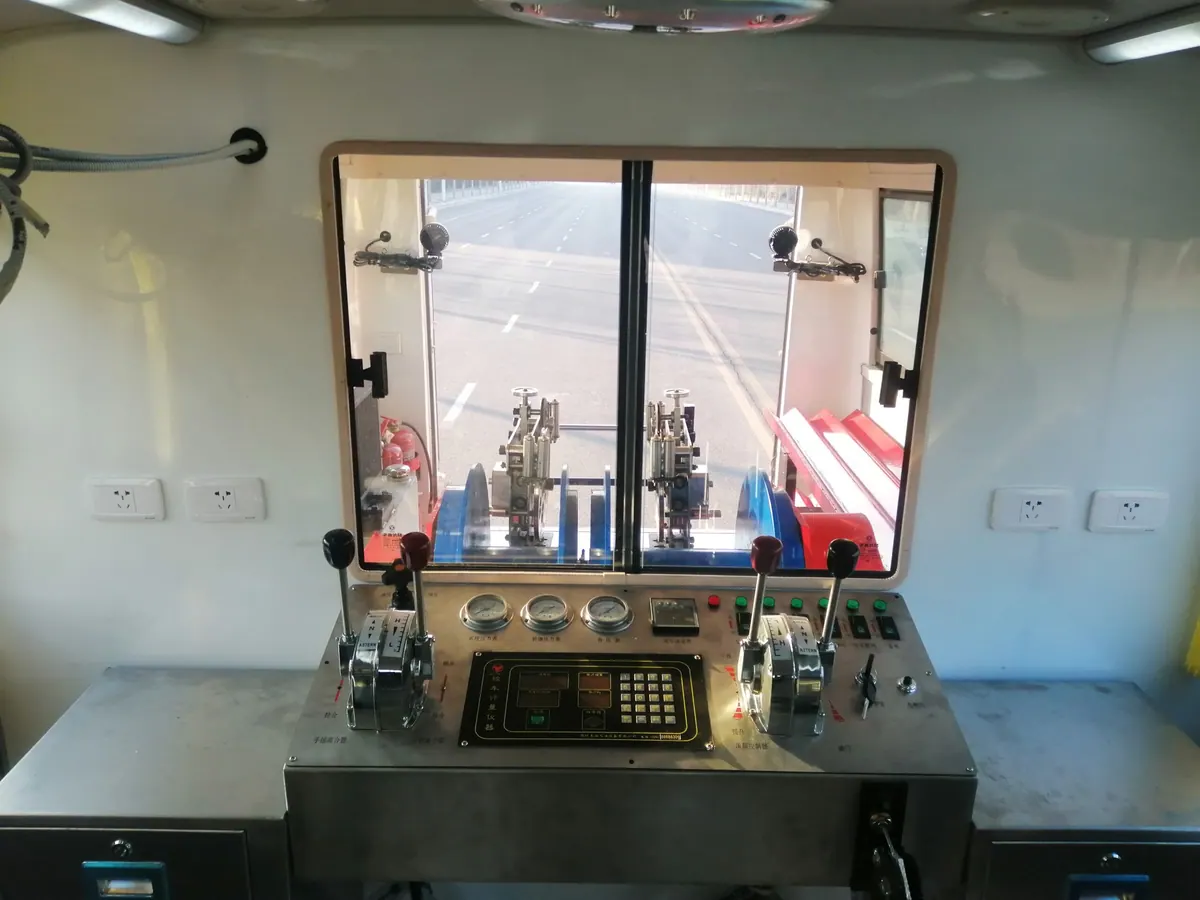
List what travels with the truck
Identify the supplied instruments, purchaser-owned tools and relevant accessories intended for transport, with configuration and packaging responsibilities stated. A general storage locker does not establish suitability for every sensitive measurement item. Give bidders the actual equipment list and relevant provider requirements rather than assume that the truck’s road-mobile design automatically approves loose tools, test records and calibration equipment for every route and shipping arrangement.
Review the supplied storage and restraint scope
Ask the responsible provider to identify the actual compartments, supports and other provisions included for the listed items. Distinguish built-in storage from separately supplied transport cases and purchaser equipment. An empty-space dimension alone may not answer the tool manufacturer’s transport requirements. Procurement should establish scope and supporting information without prescribing an improvised restraint, approving an unreviewed lifting arrangement or claiming universal shock protection from a cabin photograph.
Preserve identity and condition information
Agree how the supplied tool and relevant records will be identified at dispatch and receipt. Keep instrument, accessory and calibration references connected to the actual items. A complete-looking set of boxes is not a usable equipment register if the contents cannot be reconciled with the purchase. Identify responsibility for any purchaser-owned equipment and retain observed discrepancies for review rather than silently assigning an existing calibration document to a different instrument.

Define the competent receipt-review contribution
Ask the relevant providers which inspections or other evidence are needed after the actual logistics and storage period. A calibration record describes identified conditions and does not automatically establish readiness after every transport event. Keep the manufacturer requirements, purchaser review and any included supplier service distinct. Procurement should assign the needed evidence without inventing a universal recalibration interval or treating a successful power-on indication as complete measurement acceptance.
Carry changed conditions into the handover
If the delivery plan, storage period or transported tool list changes, request the appropriate provider review of the original arrangements. Retain final transport and receipt information with the equipment records. A truck accepted for one identified instrument package should not later be represented as suitable for every replacement tool. Keep any required verification and unresolved condition explicit before the equipment is released to the accepted well-survey assignment.
Compare the complete instrument care boundary
Have bidders distinguish vehicle storage features, tool-specific packaging and post-delivery review duties. Compare offers against the same actual tool list and logistics assumptions, with purchaser equipment clearly identified. A practical care plan supports ownership without guaranteeing that every measurement remains unaffected by every journey. The accepted purchase should provide usable equipment identities and relevant condition records, while the responsible instrument provider and competent project team determine the appropriate readiness evidence. Avoid treating a roadworthy vehicle or an old certificate as proof of the current state of every carried measurement device.
Put these items side by side in the bid review
| Purchase item | Question to resolve | Evidence to request |
|---|---|---|
| Contents | Which tools and accessories travel? | Identified transport equipment list |
| Provisions | What storage and support is supplied? | Accepted provider response |
| Receipt | What establishes readiness for review? | Condition and instrument evidence |
Suggested wording for the quotation request
Itemize instrument transport and storage provisions for the proposed well test truck and attached tool list. Distinguish supplied compartments, tool-specific cases and purchaser equipment. Preserve instrument and document identities at dispatch and receipt, with condition-review responsibilities and relevant provider requirements identified. State logistics limitations and the scope of post-delivery support without assuming that road transport or a power-on check proves measurement readiness.
Select the well test truck against the accepted instrument program and required measurement outputs. Identify the actual tools, line arrangement, depth and load basis, acquired channels and supported working environment. Keep deployment equipment, recording functions, external pressure control and surface flow-test systems under explicit supply boundaries. A calibration certificate supports an identified measurement, not universal truck accuracy or an unrestricted test result. Ask for the evidence and limitations that matter to the intended decision. Retain the selected configuration, interface documents and verification records with the purchase; actual wellsite work requires competent personnel and approved procedures.
For the wider equipment scope, consult the Oilfield Well Test Truck: Commissioning Guide. Use the RFQ checklist to collect the supporting documents before requesting a configuration-specific quotation.
Buyer questions
Does a cabin locker establish protection for every instrument?
No. Review the selected tool and actual supplied provisions.
Does a previous calibration record prove readiness after any journey?
Not by itself. Apply the relevant provider and competent receipt-review requirements.
Background and supplier contact
NIST metrological traceability background offers related background, not certification of the equipment in a quotation. Applicability must be checked for the project and destination.
Explore the well test truck, browse all technical resources, or visit Vance Petroleum for company information. Request a well-test package proposal with identified instruments, measurement tasks, acquisition interfaces and destination requirements.